
Global Standards
GS1 standards play an important role in modern warehousing by providing a globally recognised method of identifying products, pallets, and logistics units throughout the supply chain. By using standardised barcode formats and data structures, information can be shared consistently between manufacturers, distributors, transport providers, retailers, and end users.
However, not every barcode used within a warehouse needs to be GS1 compliant. Internal warehouse locations, storage positions, assets, and operational processes are often managed using barcode systems that have been designed specifically for the needs of that facility. In many cases, the most appropriate barcode symbology will depend on factors such as the amount of information being encoded, available label space, scanning distance, existing equipment, and future technology requirements.
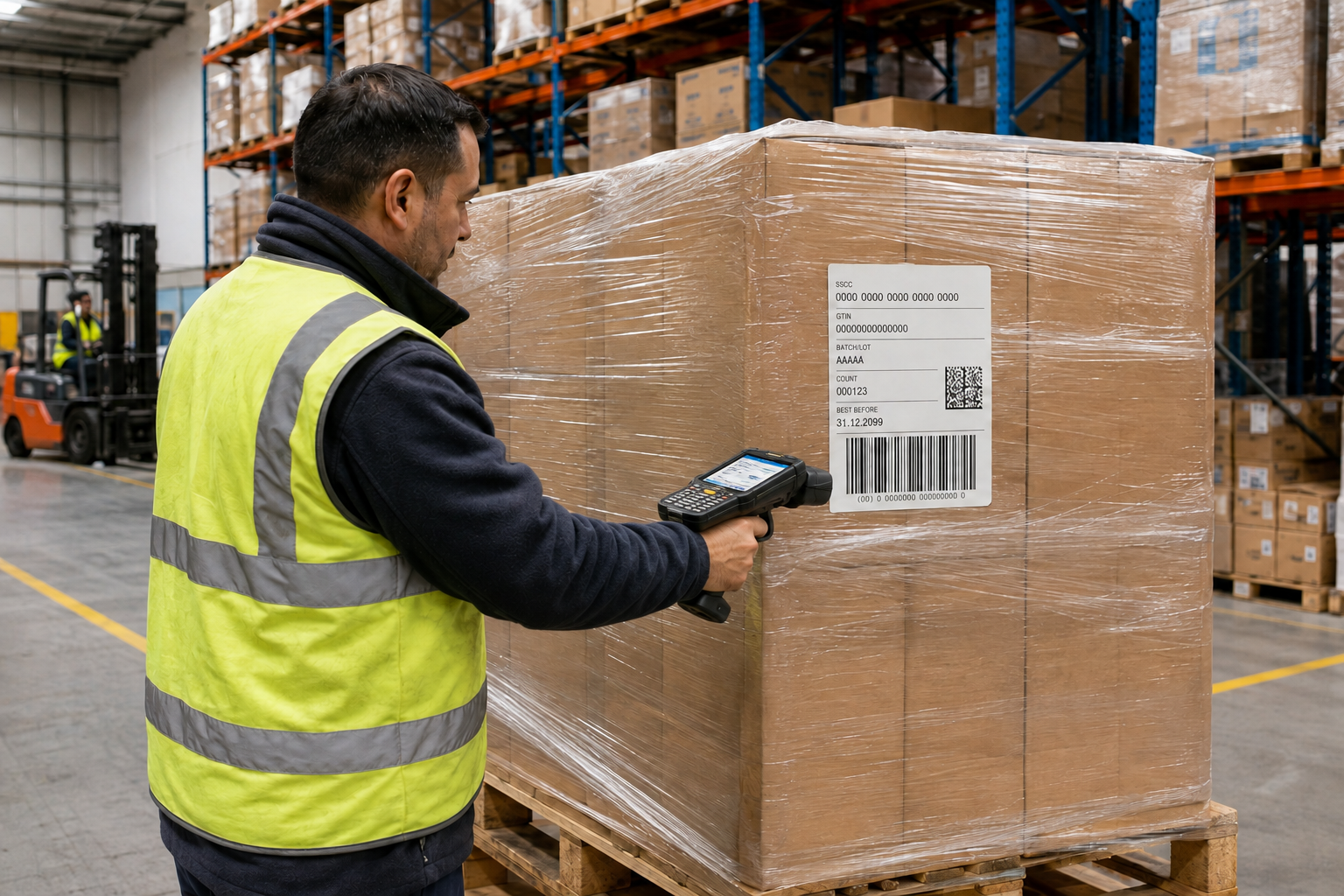
For example, a warehouse location label may only require a simple location identifier that can be scanned quickly and reliably from a forklift. In contrast, a pallet label intended for external distribution may need to comply with GS1 standards and include information such as product identifiers, batch numbers, serial numbers, or expiry dates. The barcode format, label layout, and data structure are often very different because they serve different purposes.
When designing a warehouse identification system, it is important to understand where information will be used and who will be using it. Internal processes can often be optimised by selecting barcode formats that maximise scan performance and minimise label size, while external supply chain requirements may dictate the use of specific GS1 standards and application identifiers.
As supply chains become increasingly interconnected, understanding the difference between internal identification requirements and external compliance requirements is becoming more important. A well-designed warehouse identification strategy considers both, ensuring information can move efficiently within the warehouse while still meeting the expectations of customers, trading partners, and industry standards.

What We See In Real Warehouses
For many organisations, barcodes remain something of a mystery. Most people understand the practical process of scanning a barcode, but the standards, symbologies, and data structures behind it are often less familiar. As a result, it is common to see businesses focus on the barcode itself rather than the role it plays within the wider supply chain.
One of the challenges with identification systems is that their value is often invisible when everything is working correctly. A pallet label that scans successfully, arrives at the correct destination, and supports accurate inventory movement is rarely noticed. However, when a label fails, becomes damaged, or cannot be scanned, the impact can be immediate. A lost pallet label can result in delays, additional labour, lost inventory visibility, or even a rejected delivery.
Whether a label is being used internally within a warehouse or externally as part of a GS1-compliant supply chain, the most successful solutions start with understanding the operating environment, application, and end user. Rather than beginning with a barcode standard, we find the best approach is often to understand the process first and then design the identification solution around it.
Planning a warehouse upgrade or relabelling project?
Talk to us about a warehouse identification system designed to last, adapt and reduce future relabelling work.