Inventory Management
A warehouse location numbering system is the foundation of accurate inventory management. Whether a facility uses selective racking, drive-in racking, double-deep storage, or automated systems, every storage position needs a unique and logical identifier. A well-designed location numbering structure allows operators to quickly find stock, reduce picking errors, simplify training, and improve inventory accuracy.
The most effective numbering systems are designed around the way the warehouse operates. A location code should be easy to understand, scalable as the facility grows, and compatible with warehouse management systems. While it can be tempting to simply number locations sequentially, investing time in a structured approach from the beginning can prevent costly re-labelling projects later.
Planning For Future Changes
One of the most common mistakes in warehouse numbering is designing a system that only works for today’s layout. Warehouses change over time, with additional rack levels, split bays, new aisles, or changes to storage methods often requiring updates to location numbering.
For example, many warehouses number rack levels as 1, 2, 3, 4, and 5. While this works initially, it can create problems if an additional beam level needs to be added between existing levels. A more flexible approach is to number levels in increments of ten, such as 10, 20, 30, 40, and 50. If a new level is added between levels 10 and 20, it can simply be numbered 15 without requiring every level above it to be renumbered.
The same principle can be applied to bays and locations. Instead of numbering bays 1, 2, 3, and 4, many facilities use 10, 20, 30, and 40. This allows additional locations such as 15 or 25 to be inserted later if a bay is split into multiple pick faces or storage positions.
Example:
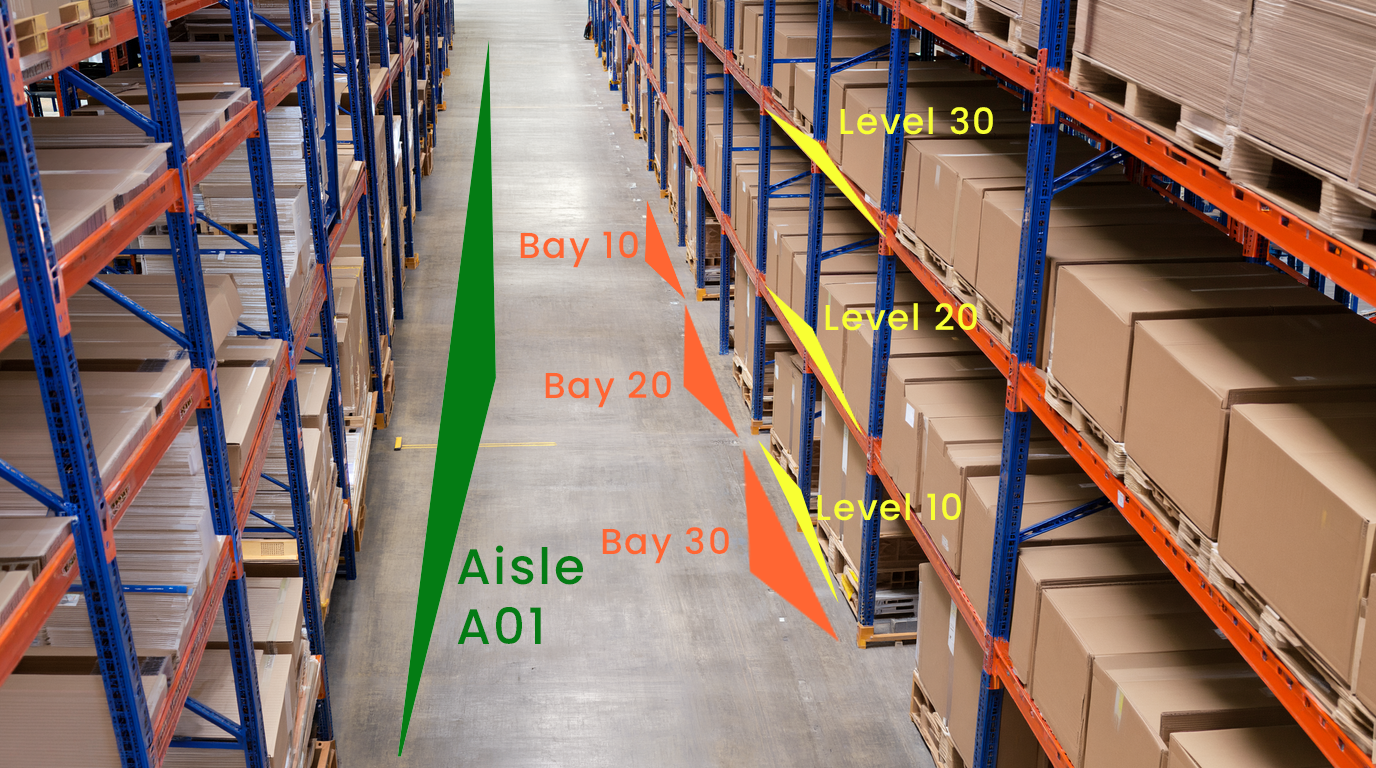
Consider the location: A01-020-30
Where:
“A01” = Aisle 1 “020” = Bay 20 “30” = Level 30
If the warehouse later decides to split Bay 20 into two separate picking locations, the new locations could become:
A01-020-30 + A01-025-30
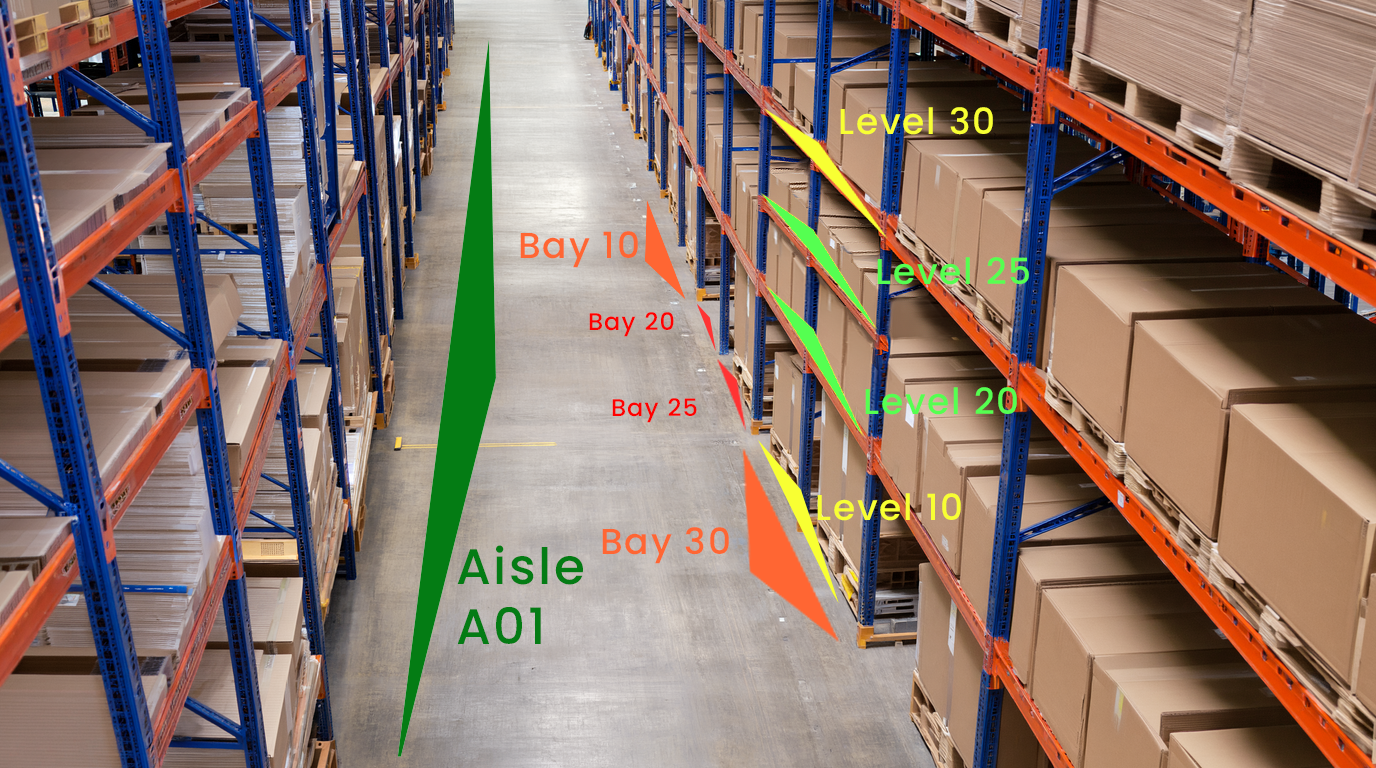
Similarly, if an additional rack level is installed between levels 20 and 30, it could be numbered:
* Level 20
* Level 25
* Level 30
This approach avoids the need to relabel large sections of the warehouse and prevents disruption to warehouse management systems and inventory records.
A well-planned numbering system should not only make locations easy to find today but also provide enough flexibility to accommodate future operational changes without requiring a complete redesign.
What We See In Real Warehouses
One of the most common mistakes we encounter is overcomplicating warehouse location numbering. It is easy to become focused on creating the perfect numbering structure, but in practice the most successful systems are usually the simplest. The real value comes from understanding how the warehouse is likely to evolve over time and designing the identification system accordingly.
During project planning, we spend time discussing future workflows, potential layout changes, automation opportunities, and the expected lifespan of the facility. Small decisions made at this stage can provide significant long-term benefits without increasing project cost. Features such as directional arrows, check digits for future voice-picking applications, and flexible location numbering structures can often be incorporated from day one.
We also regularly find that the information people need to see is not always the same information that needs to be encoded within the barcode. Separating human-readable information from system data can create simpler, more intuitive warehouse identification while still supporting future operational requirements.