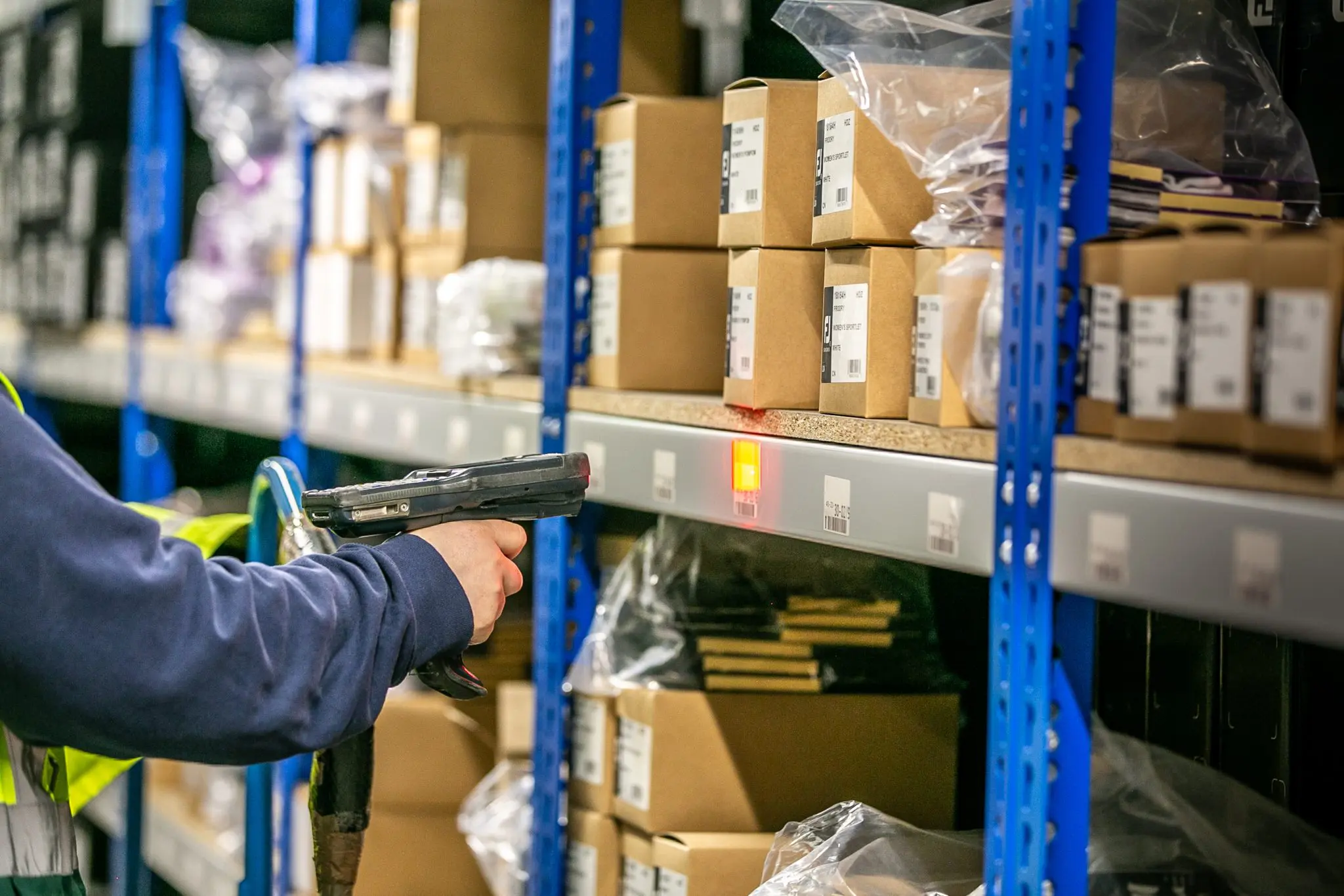
Traceability has become a much bigger part of manufacturing over the past few years.
More information is being captured, stored and shared. Businesses want to know where materials came from, what batch they were used in, where finished goods went and, if something goes wrong, exactly what is affected.
Most of that information lives in a system somewhere.
But the system still needs something physical to connect the data to.
That could be a batch label on a drum, an SSCC on a pallet, a serial number on an asset or a Data Matrix code on a component.
If that identifier disappears, becomes unreadable or was never suitable for the application, the traceability chain weakens very quickly.
We tend to see this most clearly in difficult applications.
Cold storage is an obvious one. A standard adhesive that works perfectly well in an ambient warehouse may not perform when applied to a cold or damp surface.
Chemical exposure is another.
Outdoor storage.
Rough plastics.
Low-energy surfaces.
Labels that need to stay in place for ten years instead of ten days.
The actual barcode or data can be completely correct and still fail operationally because the material underneath it was wrong for the job.
That is why we think traceability needs to be considered as a physical application as well as a system one.
The useful questions are usually quite practical.
What environment will the label live in?
How long does it need to remain readable?
Will it be scanned manually or automatically?
Does the item move through different temperatures?
Does the identifier need to survive washing, chemicals or outdoor exposure?
And perhaps the most important one:
What happens to the process if the identification fails?
For some applications the answer is “not much”.
For others it could mean losing track of a batch, a pallet, a container or an asset.
That difference matters.
At Warehouse IDentification, we have spent a long time working on the less glamorous part of traceability: making sure the physical identification keeps doing its job.
Because good data is not much use if it loses its connection to the thing it is meant to identify.