
Key Considerations for Warehouse Racking Labels
Warehouse racking labels provide the visual link between physical storage locations and the warehouse management system. When designed correctly, they help operators navigate quickly, reduce picking errors, and support inventory accuracy.
Effective racking identification involves more than applying barcode labels to beams. Consideration should be given to viewing distance, forklift approach direction, level identification, aisle numbering, and future warehouse expansion. Many facilities also benefit from supplementary identification such as aisle signs, end-of-row markers, and upright totems. A well-planned system creates consistency throughout the warehouse and makes locations easy to identify from anywhere within the facility.
One of the most overlooked decisions is the choice of label material and attachment method. Traditional permanent adhesive labels may appear to be the lowest-cost option initially, but they can create significant labour costs over the life of the warehouse. When labels become damaged, layouts change, or racking is replaced following safety audits, removing old labels can be time-consuming and may damage painted rack surfaces.
For this reason, many warehouses are now adopting repositionable or removable racking label systems. These solutions allow labels to be applied quickly, moved when locations change, and removed cleanly when racking requires maintenance or replacement. This not only protects the underlying asset but also reduces the labour required during warehouse reconfigurations and expansion projects.
The best racking identification systems are designed with the entire lifecycle of the warehouse in mind. While barcode readability and location numbering remain critical, consideration should also be given to future audits, operational changes, rack replacements, and ongoing maintenance requirements. A small decision made during installation can have a significant impact on the time and cost required to manage the warehouse for years to come.
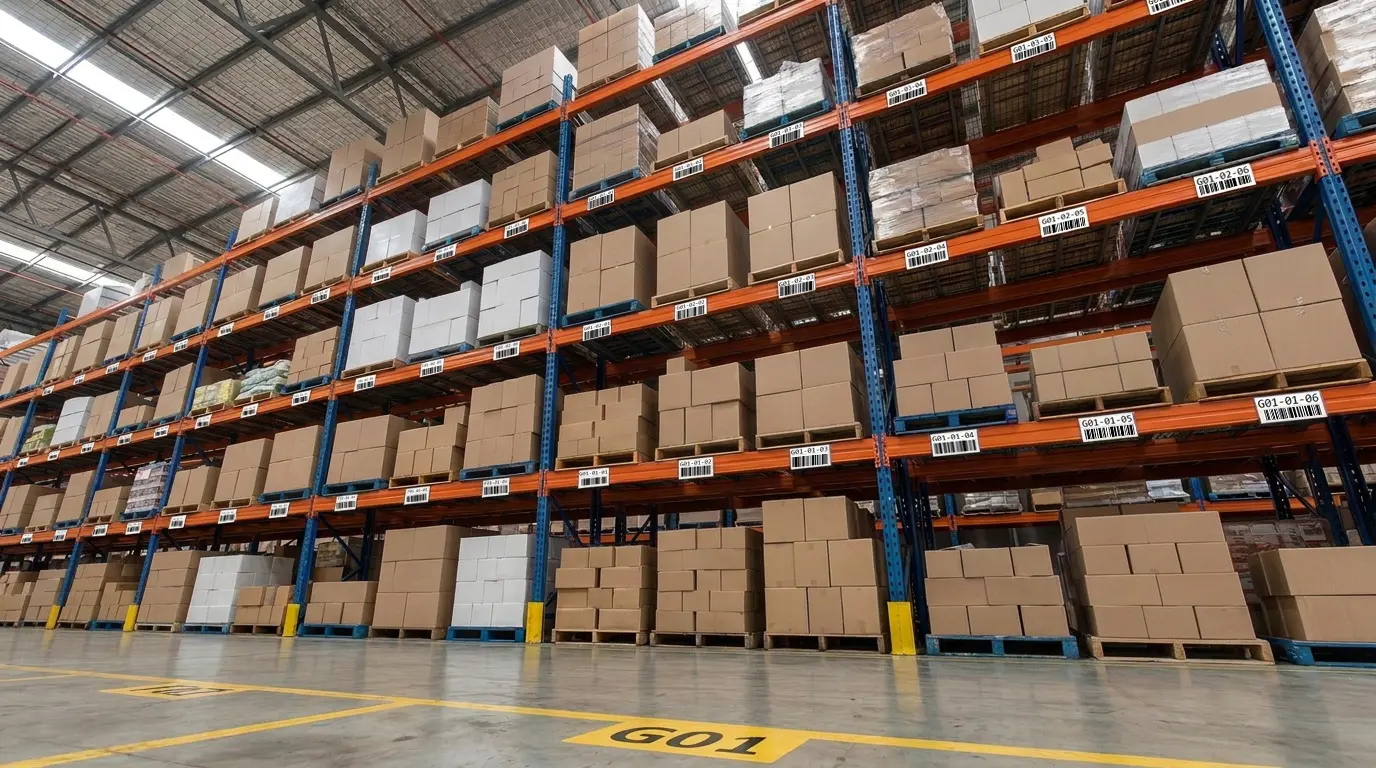

What We See In Real Warehouses
Nobody likes scraping labels.
It is one of the most common conversations we have when discussing warehouse racking identification. Removing old labels is slow, repetitive, frustrating work, yet many warehouses continue to accept it as an unavoidable part of maintaining their location system. Much of that effort can be eliminated by selecting the right identification solution from the beginning.
What surprises many people is that the biggest benefit of repositionable racking labels is often not the ability to remove them later. It is the speed and flexibility during installation and ongoing operation. If a label is applied incorrectly, a location changes, or a beam is replaced following damage or a rack audit, the identification can be updated quickly without damaging the underlying asset or resorting to temporary printed labels.
Many warehouse managers compare repositionable labels to magnetic systems. Both provide flexibility, but low-profile repositionable labels are typically more cost-effective, less prone to accidental damage, and less likely to be removed or misplaced. The result is a cleaner, more adaptable identification system that can evolve with the warehouse over time.
Planning a warehouse upgrade or relabelling project?
Talk to us about a warehouse identification system designed to last, adapt and reduce future relabelling work.